
Thursday, July 29, 2010


Ken Russell 3 July 1927 – 27 November 2011
 |
| Original Film Poster |
For a full obituary and short film about his work follow this link to The Guardians obituary of this film making force of nature. http://www.guardian.co.uk/film/2011/nov/28/ken-russell-cinema-dies
He was larger than life in every way, and this was always reflected in nearly everything he was involved in.Ken Russell, film maker, documentary maker, writer and larger than life individual, 3 July 1927 – 27 November 2011.

Sunday, July 25, 2010
Fairport Covention Maidstone 1970...

At last the whole concert has been uploaded to YouTube, all be it in frustrating 4min segments?!! Brilliant musicianship and songwriting from the strongest Fairport line up post Sandy Denny. Once Sandy had gone, you really had to think of them as a different band. The dynamics changed considerably with the mercurial Dave Swarbrick stepping into the fore to almost become the band leader. The material changed too once Sandy had left to join Fotheringay. The band started to delve more and more into the traditional folk song genre which had started with the classic "Liege and Leaf" album. The highlight for me is the live 9min version of "Now Be Thankful". The rest as they say is musical history. What puzzles me is all the hype around Bumford and Sons, or whatever they're called. It's been sitting ready to be listened to in the shape of Fairport Convention, Steeleye Span and all for the past 40 years!!

"Now be Thankful" Maidstone 1970
Blackwaterside
Taught to Bert Jansch by Anne Briggs, who wrote the original song, but the tune was probably influenced by a traditional English folk tune, stolen by Jimmy page and presented to the world on Led Zeppelin's 1st album as Black Mountainside complete with sitar and finally to me by way of Bert Jansch's version. Drop 'D' tuning, capo 2nd fret.

11 Moustachioed Daughters...Viv Stanshall and The Big Grunt
This from 1970 I think, The Marty Feldman something or other. If this isn't on of the most disturbing pieces of television, then I don't know what it is. Brilliantly insane, Roger Ruskin Spears inventions, Viv Stanshall's eye's and who the hell is that little fat guy on the guitar, and more to the point where did Viv find him? Good God the seventies were a strange time...

Friday, July 23, 2010
billy childish - sunday painter
Documentary look at the world of the multi talented Billy Childish...Let the film and the man speak for themselves. Far too prolific to sum up at this time of night...

Billy Childish Documentary...

Billy Childish Documentary...
Oliver Postgate and the story of Small Films...

Oliver Postgate was and will always be a giant of children's television/animation/film and fantasy. He created hundreds of hours of food for young minds in the shape of the various projects, programmes and characters under the Small Films umberella, and what's even more amazing is that he did it with the help of only a handful of like minded enthusiasts in his tiny studio come barn.
They didn't call it Small Films for nothing. The company consisted of Postgate and Peter Firmin, and between them they cooked up among others, Ivor The Engine, The Clangers, Bagpuss, Noggin The Nog and The Pogles.
Oliver Postgate wrote the scripts, narrated most of the voices, did the sound effects, created the characters and took care of all the animation filming and sound production, while Peter Firmin drew and built the characters, made costumes and scenery and painted the sets. So, with cardboard cut out characters, often coloured by their children, elastic bands, string, sellotape, blue tack, cotton wool and other odds and ends they conjured up the magical worlds of Ivor, Noggin and all the other wonderful characters that transformed the lives of legions of school children, for five minutes each weekday evening during the 1970's before the boring world of grown ups and the six o'clock news.
Behind the scenes, Oliver Postgate called in Anthony Jackson to help with some of the voices. Peter Firmin's own daughter played the role of Emily in the unbeatable 'Bagpuss', while the characters where brought to life with the aid of Meccano, brass tacks, magnets, fuse wire and the timeless magic of stop start animation.
Simpler times, in a simpler world. Watch this affectionate documentary and re-live the magic that was Oliver Postgate and Small Films. Ivor the Engine of course is back in all new episodes made for BBC Wales, and even though most of the animation is now created using computers, none of the magic is lost. Thanks Oliver for enriching and shaping my childhood and my imagination.
Pelagicus...Mike, Neil & Mark Pearson's family wildlife album
All kinds of critters and creatures and a profusion of birdlife abound in this excellent nature/wildlife/travel/photography blog from Yorkshires answer to The Three Amigos. In their own words... "After their great Floridian adventure, the 3 members of the Pearson clan returned to their respective homes. Mark, being drastically short of money, took up a post as personal trainer to Bruce Forsyth, to prepare him for the forthcoming series of "Come Dancing". Neil, is taking a short rest in Providence before setting off for Chile in order to research his next book - The Frogs of the Atacama Desert. Mike has returned to the UK where he spends all his time watching Coronation Street". GoTo: http://pelagicus.blogspot.com/
Large Emerald...

Large Emerald...

Wednesday, July 21, 2010
VBS.TV
http://www.vbs.tv/watch/soft-focus-uk/billy-childishArt, Technology, Science, Music, Underground Film, Internet, Video, Environmentalism, Fringe Politics, Sex, Communication, Design, Ideas, Drugs, Animals, People, Interviews, Views, Arty Americans, German Inventors, Culture etc...It's all here at www.VBS.TV
Billy Childish interview link:
http://www.vbs.tv/watch/soft-focus-uk/billy-childish

Billy Childish interview link:
http://www.vbs.tv/watch/soft-focus-uk/billy-childish

Friday, July 16, 2010
Poor Boy a Long Ways From Home...
I've no idea who wrote this originally, maybe someone can enlighten me. I got it from listening to John Fahey. When I was playing it originally it was simpler, then I noticed the similarity with the Stones song 'Poor Boy' off the 'Beggars Banquet' L.P. I sort of mashed up the two adding one of Keith's licks in the second and third verse. Open D Tuning.
Tuesday, July 13, 2010
The Dovers.."Baby What am I Gonna Do"
Christ knows I love this song and the mighty Dovers (more on them later). Nostalgia, family and great tunes...
Vigilante Man..
My take on the Woody Guthrie Classic via Ry Cooder. Sound quality a bit poor, but we don't worry about that sort of thing round these parts.
Bobby Brown...Not Whitney's Bad Boy
I discovered this, to put it mildly, strange artist through my friend, NZ musician Stefan Neville. Read his strange story at the excellent Mutant Sounds blogspot. I can't work out whether I actually like this album, 1972's "The Enlightening Beam Of Axonda", but I keep listening to it so something's going on. He would've made a brilliant cult leader I'm sure. No idea who Johnny is in the narrative of the album, maybe it was Bobby himself. He loved his dogs. Very tripped out and spooky...Read the article, download the music here: http://mutant-sounds.blogspot.com/2007/01/bobby-brown-1972-enlightening-beam-of.html
Mr. Bobby Brown

Mr. Bobby Brown

Sunday, July 11, 2010
The West Coast Pop Art Experimental Band
I've just recently got into this act from the late '60's. They seem very eclectic but interesting if a little patchy. I'll write more once I've investigated them a bit further. In the meantime...
I made this film to go with this insanely great little track "Roger the Rocket Ship", from the album "Markley, A Group"..."Look out for me I'll tear you apart, look out for me I have no heart". Very Charlie Manson lyrically and a little bit disturbing. Got that west coast 1969 spook to it. Just Fab!
I made this film to go with this insanely great little track "Roger the Rocket Ship", from the album "Markley, A Group"..."Look out for me I'll tear you apart, look out for me I have no heart". Very Charlie Manson lyrically and a little bit disturbing. Got that west coast 1969 spook to it. Just Fab!
Thursday, June 24, 2010
Mark Linkous. Dead at 47...
Mark Linkous. September 9, 1962 – March 6, 2010.

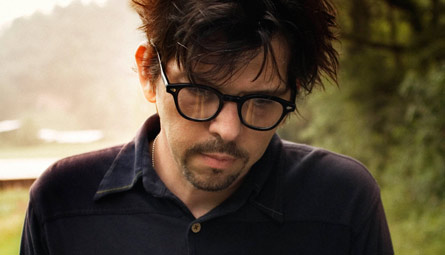
I first heard Sparklehorse aka Mark Linkous in 1996. I was working two jobs, both terrible, and the song that came blasting out of the warehouse radio, on a frigid December morning was, "Someday I will Treat You Good". It was an insane, updated blast of Neil Young rock n roll squeezed through a megaphone and spat out at the world like a sonic cannonball.
When I first saw Sparklehorse, they were touring for the first time since Mark's now notorious and over played overdose on booze and valium. His legs where fucked, his heart was healing after stopping, and he hobbled on stage with a cane and guitar. He sat through the set, played and sang his heart out, walked off in the middle of the encore and at the time I believed he was the saviour of rock n roll. The band were obvious stand ins to his immense talent.
I bought the first album and played it to death. I still have it and all the singles of it and cherish them to this day. After that the music got darker. I bought "Goodmorning Spider" but sort of lost touch with Sparklehorse as my life went down the path Linkous's had gone before, booze, heroin and valium. I lost touch with music, friends, all my instruments and day to day reality. I got clean this year on the day Linkous killed himself, drunk, upset, shooting a bullet through that same fraglie and damaged heart.
I'm revisiting his music, his images, his life, his work. I'd loved to have seen him live one more time, but that's not the way things work out. There was always a spiritual, almost religious element to his music in my mind, something that journalists missed while clamoring for the overdose story for the 100th. time. I still feel that spirituality, that otherness when listening to Mark sing. Sparkle and shine in your own space forever...
I'll leave you with Sparklehorse doing a version of William Blakes "London". The clip was made as a kind of tribute. Sad and Beautiful...
I first heard Sparklehorse aka Mark Linkous in 1996. I was working two jobs, both terrible, and the song that came blasting out of the warehouse radio, on a frigid December morning was, "Someday I will Treat You Good". It was an insane, updated blast of Neil Young rock n roll squeezed through a megaphone and spat out at the world like a sonic cannonball.
When I first saw Sparklehorse, they were touring for the first time since Mark's now notorious and over played overdose on booze and valium. His legs where fucked, his heart was healing after stopping, and he hobbled on stage with a cane and guitar. He sat through the set, played and sang his heart out, walked off in the middle of the encore and at the time I believed he was the saviour of rock n roll. The band were obvious stand ins to his immense talent.
I bought the first album and played it to death. I still have it and all the singles of it and cherish them to this day. After that the music got darker. I bought "Goodmorning Spider" but sort of lost touch with Sparklehorse as my life went down the path Linkous's had gone before, booze, heroin and valium. I lost touch with music, friends, all my instruments and day to day reality. I got clean this year on the day Linkous killed himself, drunk, upset, shooting a bullet through that same fraglie and damaged heart.
I'm revisiting his music, his images, his life, his work. I'd loved to have seen him live one more time, but that's not the way things work out. There was always a spiritual, almost religious element to his music in my mind, something that journalists missed while clamoring for the overdose story for the 100th. time. I still feel that spirituality, that otherness when listening to Mark sing. Sparkle and shine in your own space forever...
I'll leave you with Sparklehorse doing a version of William Blakes "London". The clip was made as a kind of tribute. Sad and Beautiful...
Tuesday, June 22, 2010
Blank again...
Blarrrghhhhh...God save us from ourselves! I hate everyone! Mundanity is the sum of everyones ambition. Fuck this consumerist nightmare. I've had it with the bloody rat race. I opt out from society and all it's silly norms. I hate football and the stupid world cup and stupid people boring on about it as if it's the be all and end all of our time on Earth. It all means nothing. Money, property, telly, politics, family, ambition, cars, consumption, stuff...it all makes me want to puke for ever. I deny this society, I deny my part in it, I deny my role, I deny the 24 hour clock, I deny I deny Ideny...We are all blind and being led by our greedy noses to the trough to feed and over feed and still never be satisfied. I wish for nothing but to be left alone for ever. I can't be a part of war mongering, of mass slaughter, of obnoxious fat politicians lining their over stuffed pockets, landlords, accountans, tax inspectors, government agencies of all kinds...destroy it all. Walk into the sea. Smash it to pieces for ever..........................There is no point in caring when nobody else cares. Thereis no point in trying to love in a loveless world. I'm drowning in lies, hypocrisy and ignorance. I'm impotent with rage at this world and I want no part of it any more, ever....fuck forever.
Weekday Vegetarian...?

As a strict vegetarian of some 21 years, I approached this article on the TED sight with skepticism. The guy lays out all the reason's why we should all be vegetarians, the stats. speak for them selves, then he did the usual, 'oh but imagine your last burger', oh the horror! I mean how could you live knowing you'll never eat another big mac again!
Anyway, I don't want to get all animal rights here. What he proposes makes sense, and is a start when it comes to managing the world's addiction to meat, tackling climate change and treating animals with more respect and dignity, than just sheer commodities. Here's the link: Weekday vegetarian
Friday, June 18, 2010
The Strange Tale of Charles Sobhraj..."The Serpent"
Charles Sobhraj
 Charles Sobhraj is a French serial killer of Indian and Vietnamese origin, who preyed on Western tourists throughout Southeast Asia during the 1970s. Nicknamed "the Serpent" and "the Bikini killer" for his skills at deception and evasion, he allegedly committed at least 12 murders and was jailed in India from 1976 to 1997, but managed to live a life of leisure in prison. He retired as a celebrity in Paris, then unexpectedly returned to Nepal, where he was arrested and sentenced to life imprisonment on August 12, 2004.
Early years
On April 6, 1944 in Saigon, Gurhmuk Sobhraj was born to an unwed Vietnamese woman. His mother, Song, was abandoned by his father, an Indian tailor, soon after her first son was born and she blamed him for her lover's dismissal. His father wanted little to do with Gurhmuk during the boy's childhood.
Eventually Song met up with a French officer stationed in French Indochina and they were wed. The soldier, Lieutenant Alphonse Darreau, was willing to adopt Song's son, but not to give the boy his name. Darreau was kind to Sobhraj, but as other children were born to Darreau and Song, Gurhmuk began to feel more and more an outsider in his own home. For his part, Darreau, who had suffered shell shock during a battle and for the rest of his life was in and out of hospitals for post-traumatic stress disorder, looked at Sobhraj as a drain on scarce family resources.
Gurhmuk took the name Charles as a teenager after being baptized a Catholic. From an early age he was disobedient and delinquent. He was a smart, charismatic youngster, but his grades suffered and he was often absent from school. When he did show up Charles was a discipline problem for his schoolmasters.
Living in Marseilles, Charles had access to ships heading east to Indochina and he began stowing away on them in an effort to reach his natural father. The affection Charles held for his father was not returned, however. Several times the boy managed to make it out of Marseilles only to be discovered while at sea and returned to port. Charles bounced back and forth between the Orient and Europe, at home in neither place.
Sobhraj received his first jail sentence (for burglary) in 1963 at Poissy prison near Paris. He weathered the harsh detention conditions using a combination of self-defense and manipulation. The latter earned him special favors from prison officials, such as keeping books in his cell, and endeared him to visitor Felix d'Escogne.
When paroled, Sobhraj moved in with d'Escogne and shared his time between the high society of Paris and the criminal underworld. He started to accumulate money through a series of scams and burglaries, and began a relationship with Chantal, a woman from a conservative Parisian family. He was arrested for evading police in a stolen car on the very night he proposed to her, and sent back to Poissy for eight months, while a supportive Chantal waited for him.
Sobhraj and Chantal were married upon his release. Soon after, facing mounting suspicions by French authorities, he and a now pregnant Chantal left France for Asia to escape arrest. Traveling through Eastern Europe using fake documents and robbing people who befriended them, they arrived in Bombay around 1970 , where Chantal gave birth to a baby girl.
The couple made a good impression on the expatriate community in India, while Sobhraj resumed his criminal lifestyle by running a car theft and smuggling operation, the profits of which were plowed into his growing gambling addiction. A botched armed robbery at a jewelry store in Hotel Ashoka in 1973 led to his arrest and imprisonment. Faking illness, he escaped with Chantal's help, but both were captured shortly after. Borrowing money from his father in Saigon to bail them out, they fled India for Afghanistan.
In Kabul, the couple resumed their habit of robbing tourists following the "hippie trail." Arrested once again, Sobhraj escaped in a similar manner as in India, feigning illness and drugging the hospital guard, then fleeing to Iran, leaving his family behind. Chantal, although still loyal to him, wanted to leave their criminal past behind, and returned to France, vowing to never see him again.
Sobhraj spent the next two years on the run, using as many as 10 stolen passports and visiting several countries in East Europe and the Middle East. He was joined in Istanbul by his younger brother André, who quickly became a pawn in many crimes in Turkey and Greece; both were eventually arrested in Athens. After an identity-switch plan gone awry, Sobhraj escaped in his usual manner, leaving his brother to serve an 18-year sentence after being turned over to the Turkish police by Greek authorities.
Murders
On the run again, Sobhraj financed his lifestyle by posing as a mysterious drug dealer to impress tourists and defrauding them when they let their guard down. In Thailand, he met Marie-Andrée Leclerc from Lévis, Quebec, one of many tourists looking for adventure in the East. Subjugated by Sobhraj's personality, Leclerc quickly became his most devoted follower, turning a blind eye to his crimes and philandering with local women
Sobhraj started gathering followers by helping them out of difficult situations, indebting them to him while he actually was the very cause of their misery. In one case, he helped two former French policemen, named Yannick and Jacques, to recover their passports that he himself had stolen; in another, he provided shelter and comfort to another Frenchman named Dominique Rennelleau, whose apparent dysentery illness was actually the results of poisoning by Sobhraj. He was also joined by a young Indian named Ajay Chowdhury, a fellow criminal who became his lieutenant. Sobhraj wanted to start a criminal "family" of sorts, in the style of Charles Manson's.
It was then that Sobhraj and Chowdhury committed their first (known) murders in 1975. Most of the victims had spent some time with the "clan" before their deaths and were, according to some investigators, potential recruits who had threatened to expose Sobhraj. The first victim was a young woman from Seattle, Teresa Knowlton, who was found burned like many of Sobhraj's other victims. Soon thereafter, a young American Jennie Bollivar, was found drowned in a tidal pool in the Gulf of Thailand, wearing a flowered bikini. It was only months later that the autopsy and forensic evidence revealed the drowning to be murder.
The next victim was a young, nomadic Sephardic Jew named Vitali Hakim, whose burned body was found on the road to the Pattaya resort where Sobhraj and his clan were staying.
Dutch students Henk Bintanja, 29, and his fiancée Cornelia Hemker, 25, were invited to Thailand after meeting Sobhraj in Hong Kong. Just as he had done to Dominique, Sobhraj poisoned them, and then nurtured them back to health to gain their obedience. As they recovered, Sobhraj was visited by his previous victim, Hakim's French girlfriend, Charmayne Carrou, coming to investigate her boyfriend's disappearance. Fearing exposure, Sobhraj and Chowdhury quickly hustled the couple out; their bodies were found strangled and burned on December 16, 1975. Soon after, Carrou was found drowned in circumstances similar to Jennie's, and wearing a similar-styled swimsuit. Although the murders of both women were not connected by investigations at the time, they would later earn Sobhraj the nickname of "the bikini killer."
On December 18, the day the bodies of Bintanja and Hemker were identified, Sobhraj and Leclerc entered Nepal using the couple's passports. There they met and, on December 21-22, murdered Canadian Laurent Ormond Carrière, 26 and Californian Connie Bronzich, 29. (The two victims were incorrectly identified in some sources as Laddie DuParr and Annabella Tremont.) Sobhraj and Leclerc then returned to Thailand, once again using their latest victims' passport before their bodies could be identified.
Upon his return to Thailand, Sobhraj discovered that his three French companions (Dominique, Yannick and Jacques) had started to suspect him, found documents belonging to the murder victims, and fled to Paris after notifying local authorities.
Sobhraj then went to Calcutta, where he murdered Israeli scholar Avoni Jacob for his passport, and used it to move to Singapore with Leclerc and Chowdhury, then to India and - rather boldly - back to Bangkok in March 1976. There they were interrogated by Thai policemen in connection with the murders, but easily let off the hook because authorities feared that the negative publicity accompanying a murder trial would harm the country's tourist trade.
Not so easily silenced, however, was Dutch embassy diplomat Herman Knippenberg, who was investigating the murder of the two Dutch backpackers, and suspected Sobhraj even though he did not know his real name. Knippenberg started to build a case against him, partly with the help of Sobhraj's neighbour. Given police permission to conduct his own search of Sobhraj's apartment (a full month after the suspect had left the country), Knippenberg found a great deal of evidence, such as victims' documents and poison-laced medicines. He would from then on accumulate evidence against Sobhraj for decades, despite the lack of cooperation by law enforcement.
The trio's next stop was in Malaysia, where Chowdhury was sent on a gem-stealing errand, and disappeared after giving the jewels to Sobhraj. No trace of him was ever found, and it is widely believed that Sobhraj murdered his former accomplice before leaving with Leclerc to sell the jewels in Geneva.
Soon back in Asia, Sobhraj started rebuilding his clan, starting in Bombay with two lost Western women named Barbara Sheryl Smith and Mary Ellen Eather. His next victim was Frenchman Jean-Luc Solomon, who succumbed to the poison intended to incapacitate him during a robbery.
In July 1976 in New Delhi, Sobhraj and the three women tricked a tour group of post-graduate French students into accepting them as guides. He then drugged them with pills which he pretended were anti-dysentery medicine. However, when the drugs started acting too quickly and the students started dropping unconscious where they stood, three of them quickly realized what was happening and overcame Sobhraj, leading to his capture by police. During interrogation, Barbara and Mary Ellen quickly cracked and confessed everything. Sobhraj was charged with the murder of Solomon, and all four were sent to Tihar prison outside New Delhi while awaiting formal trial.
Prison time
Conditions inside the notorious prison were unbearable; both Barbara and Mary Ellen attempted suicide during the two years before their trial. Sobhraj, however, had entered with precious gems concealed in his body and was experienced in bribing captors and living comfortably in jail.
Sobhraj turned his trial into a show, hiring and firing lawyers at whim, bringing in his recently-paroled and still-loyal brother André to help, and eventually going on a hunger strike. He was nonetheless sentenced to 12 years in prison instead of the expected death penalty. Leclerc was found guilty of the drugging of the French students, then later paroled and returned to Canada when she developed ovarian cancer. She was still claiming her innocence, and reportedly still loyal to Sobhraj, when she died at home in April 1984.
Sobhraj's systematic bribery of prison guards at Tihar reached outrageous levels. He led a life of luxury inside the jail, with TV, and gourmet food, having befriended both the guards and the prisoners. He would walk in and out of jail whenever he wanted. Revelling in his notoriety, he gave interviews to Western authors and journalists, such as Oz magazine's Richard Neville in the late 1970s, and Alan Dawson in 1984. He freely talked about his murders, while never actually admitting to them, and pretended that his actions were in retaliation against Western imperialism in Asia, an excuse which most criminologists find highly doubtful.
He also needed to find a way to prolong his sentence, since the 20-year Thai arrest warrant against him would still be valid on his intended release date, leading to his deportation and almost certain execution. So in March 1986, on his tenth year in prison, he threw a big party for his prisoner and guard friends and, having drugged them with sleeping pills, walked out of the jail.
Sobhraj was quickly caught in Goa and had his prison term prolonged by 10 years, just as he had hoped. On February 17, 1997, 52-year old Sobhraj was released, with most warrants, evidence and even witnesses against him long lost. Without any country to deport him to, Indian authorities let him return to France.
Celebrity and Re-Capture
Sobhraj then lived in the suburbs of Paris, enjoying a comfortable retirement. He hired an agent and charged thousands of dollars for interviews and photographs, and upwards of $15 million for a movie deal based on his life. Meanwhile, families of victims, and investigators such as Knippenberg, despaired of seeing justice served.
Then, on September 17, 2003, Sobhraj was unexpectedly spotted by a journalist in a street of Kathmandu and quickly reported to the local authorities. He was arrested two days later by Nepalese police in the casino of the Yak and Yeti hotel. On August 20, 2004, the Kathmandu District Court sentenced him to life imprisonment for the 1975 murders of Bronzich and Carrière. Most of the evidence against him came from the painstaking accumulation of documents by Knippenberg and Interpol.
Sobhraj's motives for returning to Nepal remain unknown, although arrogance and need for attention likely had a part in it. He appealed the conviction, claiming he was sentenced without trial. In September, his lawyer announced Sobhraj's wife in France would file a case against the French government before the European Court of Human Rights, for refusing to provide him with any assistance. His conviction was confirmed in 2005 by Kathmandu's Court of Appeals.
Current Status
In late 2007, news media reported that Sobhraj's lawyer had appealed to the current French president, Nicolas Sarkozy, for intervention with the Nepalese in his case, as he waited in prison for a retrial ordered by the Nepal Supreme Court. His lawyer claims that Sobhraj has been the victim of racial prejudice.
Sources:
Johnny Depp Zone
Crime Lab
Wikipedia

Early years
On April 6, 1944 in Saigon, Gurhmuk Sobhraj was born to an unwed Vietnamese woman. His mother, Song, was abandoned by his father, an Indian tailor, soon after her first son was born and she blamed him for her lover's dismissal. His father wanted little to do with Gurhmuk during the boy's childhood.
Eventually Song met up with a French officer stationed in French Indochina and they were wed. The soldier, Lieutenant Alphonse Darreau, was willing to adopt Song's son, but not to give the boy his name. Darreau was kind to Sobhraj, but as other children were born to Darreau and Song, Gurhmuk began to feel more and more an outsider in his own home. For his part, Darreau, who had suffered shell shock during a battle and for the rest of his life was in and out of hospitals for post-traumatic stress disorder, looked at Sobhraj as a drain on scarce family resources.
Gurhmuk took the name Charles as a teenager after being baptized a Catholic. From an early age he was disobedient and delinquent. He was a smart, charismatic youngster, but his grades suffered and he was often absent from school. When he did show up Charles was a discipline problem for his schoolmasters.
Living in Marseilles, Charles had access to ships heading east to Indochina and he began stowing away on them in an effort to reach his natural father. The affection Charles held for his father was not returned, however. Several times the boy managed to make it out of Marseilles only to be discovered while at sea and returned to port. Charles bounced back and forth between the Orient and Europe, at home in neither place.
Sobhraj received his first jail sentence (for burglary) in 1963 at Poissy prison near Paris. He weathered the harsh detention conditions using a combination of self-defense and manipulation. The latter earned him special favors from prison officials, such as keeping books in his cell, and endeared him to visitor Felix d'Escogne.
When paroled, Sobhraj moved in with d'Escogne and shared his time between the high society of Paris and the criminal underworld. He started to accumulate money through a series of scams and burglaries, and began a relationship with Chantal, a woman from a conservative Parisian family. He was arrested for evading police in a stolen car on the very night he proposed to her, and sent back to Poissy for eight months, while a supportive Chantal waited for him.
Sobhraj and Chantal were married upon his release. Soon after, facing mounting suspicions by French authorities, he and a now pregnant Chantal left France for Asia to escape arrest. Traveling through Eastern Europe using fake documents and robbing people who befriended them, they arrived in Bombay around 1970 , where Chantal gave birth to a baby girl.
The couple made a good impression on the expatriate community in India, while Sobhraj resumed his criminal lifestyle by running a car theft and smuggling operation, the profits of which were plowed into his growing gambling addiction. A botched armed robbery at a jewelry store in Hotel Ashoka in 1973 led to his arrest and imprisonment. Faking illness, he escaped with Chantal's help, but both were captured shortly after. Borrowing money from his father in Saigon to bail them out, they fled India for Afghanistan.
In Kabul, the couple resumed their habit of robbing tourists following the "hippie trail." Arrested once again, Sobhraj escaped in a similar manner as in India, feigning illness and drugging the hospital guard, then fleeing to Iran, leaving his family behind. Chantal, although still loyal to him, wanted to leave their criminal past behind, and returned to France, vowing to never see him again.
Sobhraj spent the next two years on the run, using as many as 10 stolen passports and visiting several countries in East Europe and the Middle East. He was joined in Istanbul by his younger brother André, who quickly became a pawn in many crimes in Turkey and Greece; both were eventually arrested in Athens. After an identity-switch plan gone awry, Sobhraj escaped in his usual manner, leaving his brother to serve an 18-year sentence after being turned over to the Turkish police by Greek authorities.
Murders
On the run again, Sobhraj financed his lifestyle by posing as a mysterious drug dealer to impress tourists and defrauding them when they let their guard down. In Thailand, he met Marie-Andrée Leclerc from Lévis, Quebec, one of many tourists looking for adventure in the East. Subjugated by Sobhraj's personality, Leclerc quickly became his most devoted follower, turning a blind eye to his crimes and philandering with local women
Sobhraj started gathering followers by helping them out of difficult situations, indebting them to him while he actually was the very cause of their misery. In one case, he helped two former French policemen, named Yannick and Jacques, to recover their passports that he himself had stolen; in another, he provided shelter and comfort to another Frenchman named Dominique Rennelleau, whose apparent dysentery illness was actually the results of poisoning by Sobhraj. He was also joined by a young Indian named Ajay Chowdhury, a fellow criminal who became his lieutenant. Sobhraj wanted to start a criminal "family" of sorts, in the style of Charles Manson's.
It was then that Sobhraj and Chowdhury committed their first (known) murders in 1975. Most of the victims had spent some time with the "clan" before their deaths and were, according to some investigators, potential recruits who had threatened to expose Sobhraj. The first victim was a young woman from Seattle, Teresa Knowlton, who was found burned like many of Sobhraj's other victims. Soon thereafter, a young American Jennie Bollivar, was found drowned in a tidal pool in the Gulf of Thailand, wearing a flowered bikini. It was only months later that the autopsy and forensic evidence revealed the drowning to be murder.
The next victim was a young, nomadic Sephardic Jew named Vitali Hakim, whose burned body was found on the road to the Pattaya resort where Sobhraj and his clan were staying.
Dutch students Henk Bintanja, 29, and his fiancée Cornelia Hemker, 25, were invited to Thailand after meeting Sobhraj in Hong Kong. Just as he had done to Dominique, Sobhraj poisoned them, and then nurtured them back to health to gain their obedience. As they recovered, Sobhraj was visited by his previous victim, Hakim's French girlfriend, Charmayne Carrou, coming to investigate her boyfriend's disappearance. Fearing exposure, Sobhraj and Chowdhury quickly hustled the couple out; their bodies were found strangled and burned on December 16, 1975. Soon after, Carrou was found drowned in circumstances similar to Jennie's, and wearing a similar-styled swimsuit. Although the murders of both women were not connected by investigations at the time, they would later earn Sobhraj the nickname of "the bikini killer."
On December 18, the day the bodies of Bintanja and Hemker were identified, Sobhraj and Leclerc entered Nepal using the couple's passports. There they met and, on December 21-22, murdered Canadian Laurent Ormond Carrière, 26 and Californian Connie Bronzich, 29. (The two victims were incorrectly identified in some sources as Laddie DuParr and Annabella Tremont.) Sobhraj and Leclerc then returned to Thailand, once again using their latest victims' passport before their bodies could be identified.
Upon his return to Thailand, Sobhraj discovered that his three French companions (Dominique, Yannick and Jacques) had started to suspect him, found documents belonging to the murder victims, and fled to Paris after notifying local authorities.
Sobhraj then went to Calcutta, where he murdered Israeli scholar Avoni Jacob for his passport, and used it to move to Singapore with Leclerc and Chowdhury, then to India and - rather boldly - back to Bangkok in March 1976. There they were interrogated by Thai policemen in connection with the murders, but easily let off the hook because authorities feared that the negative publicity accompanying a murder trial would harm the country's tourist trade.
Not so easily silenced, however, was Dutch embassy diplomat Herman Knippenberg, who was investigating the murder of the two Dutch backpackers, and suspected Sobhraj even though he did not know his real name. Knippenberg started to build a case against him, partly with the help of Sobhraj's neighbour. Given police permission to conduct his own search of Sobhraj's apartment (a full month after the suspect had left the country), Knippenberg found a great deal of evidence, such as victims' documents and poison-laced medicines. He would from then on accumulate evidence against Sobhraj for decades, despite the lack of cooperation by law enforcement.
The trio's next stop was in Malaysia, where Chowdhury was sent on a gem-stealing errand, and disappeared after giving the jewels to Sobhraj. No trace of him was ever found, and it is widely believed that Sobhraj murdered his former accomplice before leaving with Leclerc to sell the jewels in Geneva.
Soon back in Asia, Sobhraj started rebuilding his clan, starting in Bombay with two lost Western women named Barbara Sheryl Smith and Mary Ellen Eather. His next victim was Frenchman Jean-Luc Solomon, who succumbed to the poison intended to incapacitate him during a robbery.
In July 1976 in New Delhi, Sobhraj and the three women tricked a tour group of post-graduate French students into accepting them as guides. He then drugged them with pills which he pretended were anti-dysentery medicine. However, when the drugs started acting too quickly and the students started dropping unconscious where they stood, three of them quickly realized what was happening and overcame Sobhraj, leading to his capture by police. During interrogation, Barbara and Mary Ellen quickly cracked and confessed everything. Sobhraj was charged with the murder of Solomon, and all four were sent to Tihar prison outside New Delhi while awaiting formal trial.
Prison time
Conditions inside the notorious prison were unbearable; both Barbara and Mary Ellen attempted suicide during the two years before their trial. Sobhraj, however, had entered with precious gems concealed in his body and was experienced in bribing captors and living comfortably in jail.
Sobhraj turned his trial into a show, hiring and firing lawyers at whim, bringing in his recently-paroled and still-loyal brother André to help, and eventually going on a hunger strike. He was nonetheless sentenced to 12 years in prison instead of the expected death penalty. Leclerc was found guilty of the drugging of the French students, then later paroled and returned to Canada when she developed ovarian cancer. She was still claiming her innocence, and reportedly still loyal to Sobhraj, when she died at home in April 1984.
Sobhraj's systematic bribery of prison guards at Tihar reached outrageous levels. He led a life of luxury inside the jail, with TV, and gourmet food, having befriended both the guards and the prisoners. He would walk in and out of jail whenever he wanted. Revelling in his notoriety, he gave interviews to Western authors and journalists, such as Oz magazine's Richard Neville in the late 1970s, and Alan Dawson in 1984. He freely talked about his murders, while never actually admitting to them, and pretended that his actions were in retaliation against Western imperialism in Asia, an excuse which most criminologists find highly doubtful.
He also needed to find a way to prolong his sentence, since the 20-year Thai arrest warrant against him would still be valid on his intended release date, leading to his deportation and almost certain execution. So in March 1986, on his tenth year in prison, he threw a big party for his prisoner and guard friends and, having drugged them with sleeping pills, walked out of the jail.
Sobhraj was quickly caught in Goa and had his prison term prolonged by 10 years, just as he had hoped. On February 17, 1997, 52-year old Sobhraj was released, with most warrants, evidence and even witnesses against him long lost. Without any country to deport him to, Indian authorities let him return to France.
Celebrity and Re-Capture
Sobhraj then lived in the suburbs of Paris, enjoying a comfortable retirement. He hired an agent and charged thousands of dollars for interviews and photographs, and upwards of $15 million for a movie deal based on his life. Meanwhile, families of victims, and investigators such as Knippenberg, despaired of seeing justice served.
Then, on September 17, 2003, Sobhraj was unexpectedly spotted by a journalist in a street of Kathmandu and quickly reported to the local authorities. He was arrested two days later by Nepalese police in the casino of the Yak and Yeti hotel. On August 20, 2004, the Kathmandu District Court sentenced him to life imprisonment for the 1975 murders of Bronzich and Carrière. Most of the evidence against him came from the painstaking accumulation of documents by Knippenberg and Interpol.
Sobhraj's motives for returning to Nepal remain unknown, although arrogance and need for attention likely had a part in it. He appealed the conviction, claiming he was sentenced without trial. In September, his lawyer announced Sobhraj's wife in France would file a case against the French government before the European Court of Human Rights, for refusing to provide him with any assistance. His conviction was confirmed in 2005 by Kathmandu's Court of Appeals.
Current Status
In late 2007, news media reported that Sobhraj's lawyer had appealed to the current French president, Nicolas Sarkozy, for intervention with the Nepalese in his case, as he waited in prison for a retrial ordered by the Nepal Supreme Court. His lawyer claims that Sobhraj has been the victim of racial prejudice.
Sources:
Johnny Depp Zone
Crime Lab
Wikipedia
Sunday, June 13, 2010
Unmann-Wittering, another great blog to while away the days of our lives on...
- Everything from collections of British statues, to videos of people blowing up buildings, there's a little bit of something for everyone here.
Unmann-Wittering is a rock band featuring Dick Unmann and Ray Wittering. These are random thoughts and reviews of things we like, occasionally interspersed with shameless self-promotion. - Follow link: http://unmann-wittering.blogspot.com/

Insanely Cool Polish Prog from 1969...
It seems Poland was thee swinging place to be in 1969, if this clip is anything to go by. Weirder than Tropicalia at it's most weirdest, this slow burner is full of aural and visual delights.
The singer is Polish legend Czeslaw Niemen, and I think that's the bands name too, and even though he may look like a serial killer and could be singing about anything from cleaning drains to laying a patio, I can't stop listening to this killer track. Hairier than a busy barbers floor, this is classic stuff for a wet Sunday afternoon in Auckland.
Personnel: Czeslaw Niemen sing, Hammond / Zbigniew Namyslowski - Alt Sax/ Janusz Zielinski - Bass guitar /Tomasz Jaskiewicz - Guitar /Czeslaw "Maly" Bartkowski - Drumsy / Zbigniew Sztyc - Tenor Sax / Michal Urbaniak - Tenor Sax, flute / Alibabki - choir.

The singer is Polish legend Czeslaw Niemen, and I think that's the bands name too, and even though he may look like a serial killer and could be singing about anything from cleaning drains to laying a patio, I can't stop listening to this killer track. Hairier than a busy barbers floor, this is classic stuff for a wet Sunday afternoon in Auckland.
Personnel: Czeslaw Niemen sing, Hammond / Zbigniew Namyslowski - Alt Sax/ Janusz Zielinski - Bass guitar /Tomasz Jaskiewicz - Guitar /Czeslaw "Maly" Bartkowski - Drumsy / Zbigniew Sztyc - Tenor Sax / Michal Urbaniak - Tenor Sax, flute / Alibabki - choir.

Subscribe to:
Posts (Atom)